Featured Intelligence
The Liver Disease Roughly a Third of Adults Have and Almost None Can Feel Now Has Two Approved Drugs
Fatty liver disease went from having no approved treatment to having two in about eighteen months. Resmetirom was cleared first, and semaglutide followed in August of
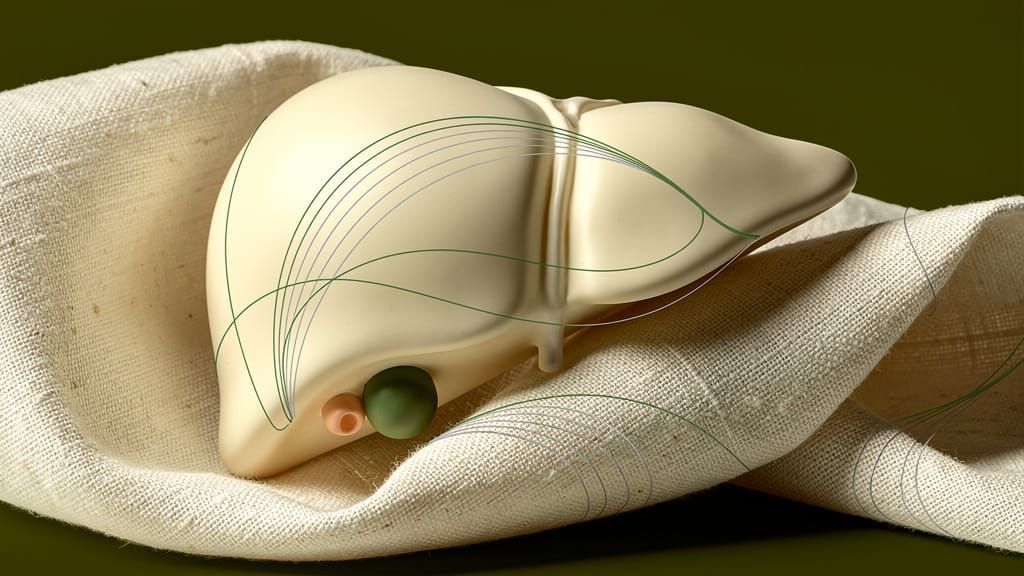
Fatty liver disease went from having no approved treatment to having two in about eighteen months. Resmetirom was cleared first, and semaglutide followed in August of last year for adults with metabolic dysfunction-associated steatohepatitis and moderate to advanced fibrosis, on the strength of the ESSENCE trial: 63 percent of treated patients had their steatohepatitis resolve without fibrosis worsening, against 34 percent on placebo, and 37 percent had fibrosis improve against 22 percent.
Those are good numbers for a condition that had nothing. The harder part of this story is that most of the people the drugs are meant for do not know they have the disease, because the liver does not hurt until very late.
From the Lab to the Ledger
The naming changed recently and that matters for following the literature. What used to be called non-alcoholic fatty liver disease is now metabolic dysfunction-associated steatotic liver disease, and its inflammatory form, once NASH, is now MASH. The rename was deliberate: the condition is defined by metabolic dysfunction rather than by the absence of alcohol, and it travels with weight, insulin resistance, blood pressure and triglycerides.
The natural history is slow and mostly silent. Fat accumulates in liver cells, and in a minority of people that fat provokes inflammation and injury. Repeated injury lays down scar tissue, staged from F0 to F4, where F4 is cirrhosis. Almost all of the risk that matters tracks with the fibrosis stage rather than with how much fat is visible on a scan. This is why a report of a fatty liver on an ultrasound done for something else is not by itself alarming, and also why it should not simply be filed away.
The two drugs work through different mechanisms. Resmetirom is a thyroid hormone receptor beta agonist that acts on the liver's own metabolism of fat. Semaglutide works on weight and metabolic control upstream, and the liver improves with them. Both were approved on biopsy-based surrogate endpoints, which is the honest caveat: the trials showed the tissue getting better, not yet that people live longer or avoid transplants. The second part of ESSENCE, which is looking at liver-related clinical events, is not expected to report until 2029.
The staging question is where an individual can actually act. Fibrosis is estimated first with FIB-4, a score calculated from age and three routine blood values most people already have in their chart, and refined with transient elastography, a painless scan of liver stiffness. A low FIB-4 is genuinely reassuring and closes the question for several years. Professional guidance points to this pathway for anyone with type 2 diabetes, obesity with metabolic risk factors, or persistently abnormal liver enzymes.
Bio-Pipeline Ledger
Resmetirom: approved for MASH with fibrosis stages F2 to F3, on biopsy endpoints, with liver-related outcome data still accruing.
Semaglutide for MASH: approved in August last year for the same fibrosis stages, not for cirrhosis, alongside diet and activity. Roughly 88 percent of trial participants stayed on the 2.4 mg dose through 72 weeks.
FIB-4 scoring: free, calculable from blood work already in most charts, validated to rule out advanced fibrosis. The cheapest step in the whole pathway and the most skipped.
Transient elastography: widely available, painless, measures liver stiffness in minutes, and is the standard second step when FIB-4 is indeterminate or high.
Liver biopsy: still the reference standard and increasingly reserved for uncertain cases, given that non-invasive staging now handles most of the sorting.
Weight loss, exercise and alcohol reduction: the intervention with the longest track record in this disease, effective at the magnitudes most people find hard to reach and sustain, and not made obsolete by either drug.
Supplements marketed for liver detoxification or fatty liver reversal: not supported by outcome data, and in a few cases, including high-dose green tea extract, associated with liver injury of their own.
The Clinical Reality Check
What is established is that two drugs now improve liver tissue in MASH with moderate to advanced fibrosis, and that non-invasive staging can identify who is in that group without a biopsy. For a disease that had no approved treatment three years ago, that is a real change.
What is overstated is the implication that a fatty liver finding now calls for a prescription. Most people with fat in the liver do not have significant fibrosis and will not benefit from either drug, the approvals are for a specific stage range, and the trials measured tissue rather than survival. Marketing that blurs those distinctions is describing a much larger market than the evidence covers.
The useful step is unglamorous and cheap. If a scan has ever mentioned a fatty or echogenic liver, or if you have type 2 diabetes or metabolic risk factors, a FIB-4 score can be calculated from blood work you have probably already had, and it is a reasonable thing to ask a physician to run and explain. A low score is the answer most people get, and it is worth having rather than assuming. A high one puts you in the group where these approvals actually apply.