Featured Intelligence
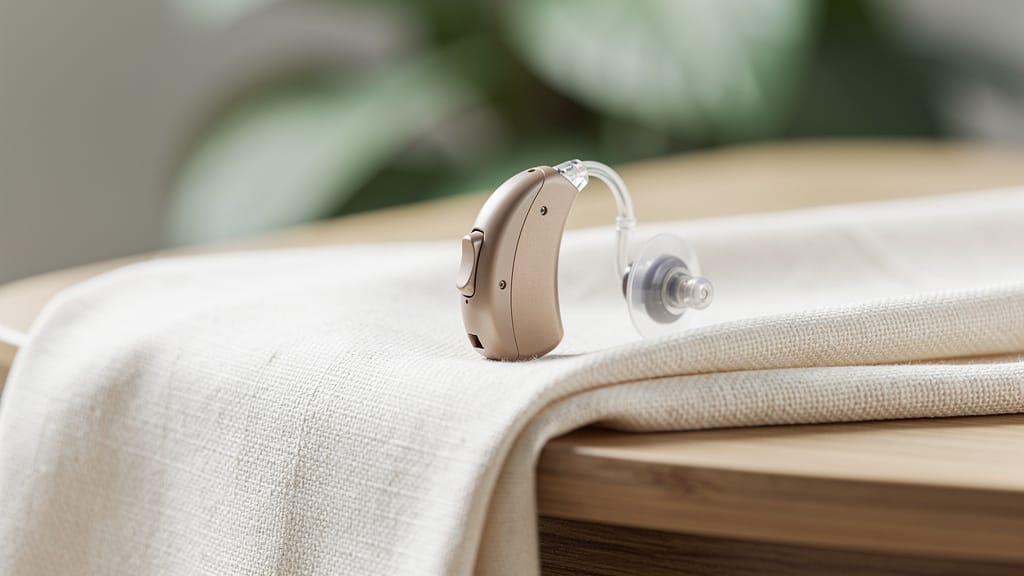
The Dementia Intervention Sitting in a Drawer, Unworn, in Millions of American Homes
A pooled analysis published this spring combined seven long-running cohort studies across 33 countries, following 61,089 adults over 55 with hearing loss. Hearing aid

A pooled analysis published this spring combined seven long-running cohort studies across 33 countries, following 61,089 adults over 55 with hearing loss. Hearing aid users developed dementia at a modestly lower rate over about six and a half years. The number that makes the finding interesting is not the overall one. It is the split inside it: people who reported that their hearing aids actually improved their hearing showed a clear reduction in risk, and people who reported poor improvement showed none at all.
That distinction is easy to skim past and it changes what the finding means. This is not evidence that owning a device protects the brain. It is evidence, in the shape you would expect if the relationship is real, that hearing better does.
From the Lab to the Ledger
Hearing loss has ranked among the largest modifiable risk factors for dementia in the major expert reviews for several years, and there are three competing explanations for why. The brain may be spending so much effort decoding degraded sound that fewer resources remain for memory and comprehension. Reduced auditory input may accelerate structural change in the parts of the brain that process it. Or hearing loss may pull people out of conversation and social life, and isolation carries its own well-documented cognitive cost. These are not mutually exclusive, and each predicts that restoring hearing should help.
The randomized evidence is narrower than the enthusiasm around it. The major trial in this area, which followed nearly a thousand older adults for three years, found no overall slowing of cognitive decline from a hearing intervention across its full population. In the subgroup at higher risk, drawn from a long-running cardiovascular cohort and older with more risk factors, decline was substantially slower in the group that received hearing aids. A prespecified subgroup result is real evidence and weaker evidence than a primary endpoint, and honest summaries say both parts.
The pooled analysis published this year sits on the observational side, which brings the usual limitation: people who buy, fit and persist with hearing aids differ from people who do not, in income, in health, in whether they have someone at home reminding them. The authors flag exactly this. What lends the finding weight is the internal comparison. If the association were purely an artifact of healthier people buying devices, benefit should not track with whether the device worked.
The underused part of this is not the science, it is the follow-through. A large share of people who need hearing aids never get them, and among those who do, a meaningful fraction stop wearing them because the fit is wrong, the sound is harsh in noisy rooms, or nobody adjusted the settings after the first fitting. Over-the-counter devices have lowered the price barrier considerably since 2022, and lowered the odds of professional adjustment along with it.
Bio-Pipeline Ledger
Hearing aids for treating hearing loss: established, effective, and now available both through audiologists and over the counter for mild to moderate loss.
Hearing treatment to slow cognitive decline: supported by a positive result in a high-risk subgroup of one randomized trial, and by consistent observational data including this year's pooled analysis. Suggestive, and short of proven for the general population.
Hearing loss as a risk factor for dementia: well established in the epidemiology, and consistently ranked among the largest modifiable contributors.
Over-the-counter hearing aids: real devices at a fraction of the traditional price, and a genuine access improvement. Their weak point is fitting and adjustment, which is where benefit is won or lost.
A hearing test: inexpensive, quick, and the actual first step. Most people who would benefit have never had one as an adult.
Supplements and "ear health" formulas marketed for hearing: no evidence of benefit for age-related hearing loss.
The Clinical Reality Check
What is established is that hearing loss is common, treatable and linked to dementia risk, and that the benefit in the data attaches to hearing better rather than to owning a device. What remains unproven is that treating hearing loss prevents dementia in the general population, which one trial tested and did not show outside a higher-risk subgroup.
That uncertainty matters less here than it usually would, because the intervention justifies itself on its own terms. Hearing better means following conversation at a family dinner, hearing a grandchild, staying in the social world that recedes quietly when sound gets harder. Those are the outcomes, not a bonus attached to a dementia claim.
The practical step is unglamorous and specific: if you or someone close to you keeps asking people to repeat themselves, get a hearing test, and if a device is fitted, insist on the follow-up appointments that make it usable. A hearing aid in a drawer delivers exactly the benefit this year's data attributes to it, which is none.