Featured Intelligence
Thyroid Cancer Diagnoses Tripled. Deaths Did Not Move.
American thyroid cancer diagnoses have more than tripled since the early 1990s. The death rate over the same period has stayed flat. When a disease is

American thyroid cancer diagnoses have more than tripled since the early 1990s. The death rate over the same period has stayed flat. When a disease is found three times as often and kills exactly as many people, the extra diagnoses are not lives being saved. They are cancers that would never have caused harm, found because someone looked.
A modeling study published in JAMA Network Open this September put a number on it. Between 72 and 94 percent of papillary thyroid cancers diagnosed in the United States from 1991 to 2019 were likely overdiagnosed. In absolute terms the researchers estimate between 443,000 and 574,000 women and between 108,000 and 155,000 men were treated over those 28 years for a cancer that was never going to trouble them.
From the Lab to the Ledger
Overdiagnosis is a specific and often misunderstood idea. It does not mean a false positive, where the test was wrong. The pathology in these cases is correct: the cells under the microscope are cancer by every standard definition. Overdiagnosis means the cancer was real and would never have produced symptoms or shortened the person's life.
Thyroid tissue turns out to be unusually prone to this. Autopsy studies of people who died of unrelated causes have long found small papillary thyroid cancers in a substantial fraction of ordinary adults who had no idea they were there and no reason to care. Most of these lesions grow very slowly or not at all. The thyroid sits a centimetre or two beneath the skin of the neck, which makes it easy to image, and that accessibility is the problem rather than a benefit.
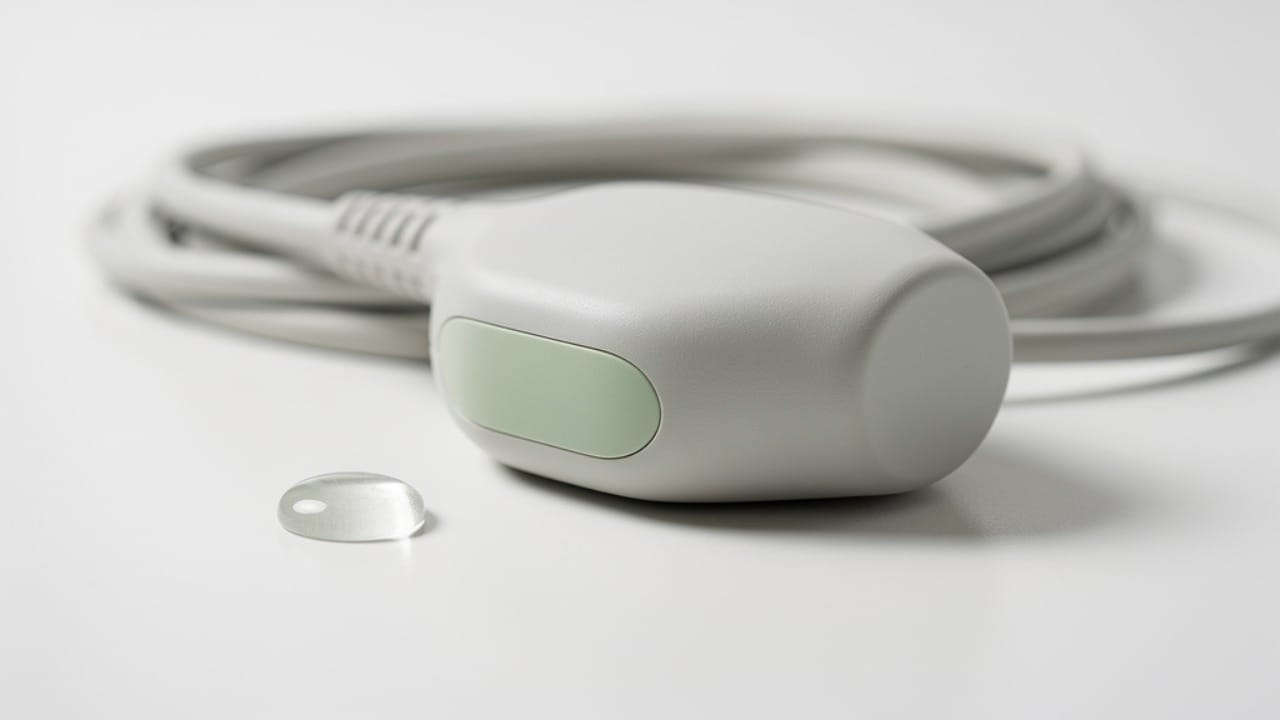
The modeling in the JAMA study traced the arithmetic directly to ultrasound. Reducing ultrasound use for nodules a clinician cannot feel by a third cut modeled 2019 incidence by 17 percent. Cutting it by two thirds cut incidence by 41 percent. Overall mortality in the model changed by less than a tenth of a percent either way. That is the signature of a test that is finding things rather than preventing deaths.
The consequences of a diagnosis are not nothing. Removing a thyroid means lifelong hormone replacement, a small risk of damage to the nerve controlling the voice and to the parathyroid glands that regulate calcium, and in some cases radioactive iodine treatment afterwards. Every one of those costs is paid in full whether or not the cancer was ever going to matter.
Bio-Pipeline Ledger
Neck ultrasound for a nodule a clinician can feel, or for specific symptoms: appropriate, validated, and not what this problem is about.
Ultrasound of nodules found incidentally on imaging done for another reason: the main driver of the diagnosis surge, with incidence rising and mortality flat. Widely used, and the practice the modeling study questions.
Fine-needle aspiration biopsy: accurate at telling cancer from benign tissue, and in this context that accuracy is the trap, because it reliably confirms cancers that did not need finding.
Active surveillance for small low-risk papillary cancers: monitoring rather than operating, with a growing body of evidence from Japanese and American cohorts showing most do not progress. Clinically accepted for selected patients, with no completed randomized trial against immediate surgery.
Molecular classifier tests for indeterminate nodules: commercially available and genuinely useful for avoiding diagnostic surgery, though they do not address whether the cancer needed finding at all.
The Clinical Reality Check
Nothing here is an argument against taking a thyroid lump seriously. A nodule you or a clinician can actually feel, a lump that is growing, hoarseness, difficulty swallowing, or a history of radiation to the neck all warrant proper assessment. Aggressive thyroid cancers exist and they kill people. The point is narrower: scanning a neck that gave no reason to be scanned is where the overdiagnosis comes from.
The authors of the study were explicit that their results should not be read as guidance about any individual nodule, and an accompanying editorial made the sensible case for watchful observation plus the randomized trials that would settle the question properly. Those trials have not been done.
What is actionable is mostly about asking why a test is happening. If a thyroid ultrasound is suggested, it is reasonable to ask what prompted it, what would be done with a small finding, and whether active surveillance would be on the table if something turned up. A nodule found incidentally on a scan ordered for a car accident is a different situation from one a doctor felt during an examination, and the two do not deserve the same response.
The wider lesson generalizes beyond the thyroid. More sensitive detection is not automatically better medicine. It is better medicine only where finding something earlier changes what happens to the person, and that is an empirical question with a different answer for every organ. This one has been answered, and the answer has not yet changed much in practice.