Featured Intelligence
A Device for Tinnitus Cleared on a Subgroup: Reading the Evidence Honestly
Tinnitus, the perception of sound with no external source, affects a large share of adults and has had essentially nothing to offer beyond sound masking and
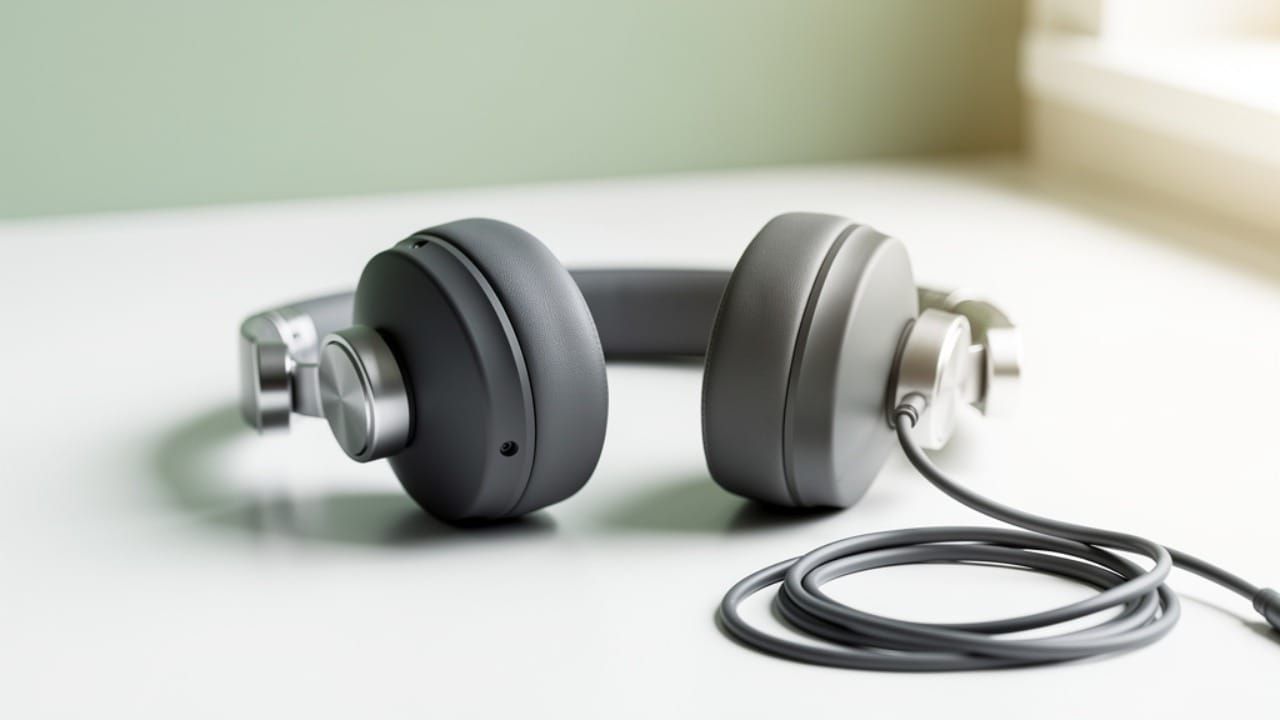
Tinnitus, the perception of sound with no external source, affects a large share of adults and has had essentially nothing to offer beyond sound masking and cognitive behavioural therapy. A device that pairs sound delivered through headphones with mild electrical stimulation of the tongue received FDA clearance in 2023 and has accumulated several real-world studies since, the most recent published this year.
It is an unusually instructive case, because the pivotal trial did not meet its primary endpoint. The clearance rests on a subgroup, the design had no sham control, and the device nonetheless appears to help a meaningful proportion of the people who use it. Holding all of those facts at once is harder than either dismissing it or endorsing it, and it is the only accurate position.
From the Lab to the Ledger
Tinnitus is generated in the brain rather than the ear. The usual explanation is that when the auditory nerve stops delivering input at certain frequencies, often after hearing loss, the auditory cortex increases its own gain and begins producing activity that is perceived as sound. This is why hearing aids sometimes reduce tinnitus, and why there is no lesion to remove.
Bimodal neuromodulation tries to exploit how the brain binds inputs that arrive together. Sound is delivered through headphones while a small electrode array on the tongue delivers timed pulses. The sensory pathway from the tongue converges with auditory processing in the brainstem, and the theory is that pairing the two drives plasticity that reweights the overactive auditory circuits. That mechanism is plausible and supported by animal work, which is not the same as established in humans.
The pivotal trial, TENT-A3, enrolled 112 adults at three European sites. Everyone received six weeks of sound alone, then six weeks of sound plus tongue stimulation, acting as their own control. Across the whole group, the response rate in the bimodal stage was lower than in the sound-only stage, so the primary endpoint was not met. In the prespecified subgroup with moderate or worse symptoms at the interim point, the bimodal stage outperformed sound alone, 58.6 percent against 43.2 percent. That subgroup result is the basis of the clearance.
Bio-Pipeline Ledger
Bimodal sound and tongue stimulation: FDA cleared through the De Novo pathway in March 2023 for tinnitus, on the strength of a subgroup result in a single-arm sequential trial. Commercially available, with evidence that is real but weaker than a randomized sham-controlled result would be.
Cognitive behavioural therapy for tinnitus: the best-supported intervention, with randomized evidence that it reduces distress and interference even though it does not change the sound itself. Validated and widely recommended.
Hearing aids for tinnitus with coexisting hearing loss: standard practice, well supported, and frequently the first thing worth trying because untreated hearing loss is the most common driver. Commercially available.
Sound masking and habituation therapies: long-established, low-risk, and helpful for some people without strong evidence of changing the underlying perception. Widely available.
Drug treatments for tinnitus: none approved. Several candidates have failed in trials, and anything offered as a pharmaceutical cure is outside the evidence entirely.
The Clinical Reality Check
The honest reading is that this device probably helps some people with moderate or severe tinnitus and that the trial design cannot tell us how much of that is the treatment. Without a sham arm, expectation effects are not separable, and both the sound and the tongue stimulation are plainly noticeable, so blinding was not possible. The investigators say so themselves. The sequential design also means the bimodal stage always came second, after six weeks of sound alone had already improved most participants.
What is reassuring is the safety profile. Of the device-related adverse events recorded in the pivotal trial, the overwhelming majority were mild and essentially all resolved. There were no device-related serious adverse events. Whatever the size of the benefit, the downside here is cost and time rather than harm, which is a materially different risk calculus from a drug or a procedure.
The practical sequence matters more than the device. Tinnitus that is new, one-sided, pulsatile or accompanied by sudden hearing loss warrants prompt medical assessment, because a small number of cases have a specific cause. Beyond that, an audiological evaluation and treatment of any hearing loss comes first, and cognitive behavioural approaches have the strongest evidence for reducing how much the tinnitus intrudes on daily life. A device like this is a reasonable thing to discuss with an audiologist after those steps, with clear expectations about cost and about what the trial did and did not show.
The broader point is about how to read a clearance. A cleared device is one a regulator judged reasonably safe and supported by some evidence of effectiveness. It is not a statement that the benefit is large or that it was measured against a placebo. Asking which endpoint a product met, and in which group, is the most useful question in this category.